<Back to news
2 Sept 2026
Why Physical Development Matters: More Than Just Milestones
The Little Gym Parent’s Guide to Physical Development
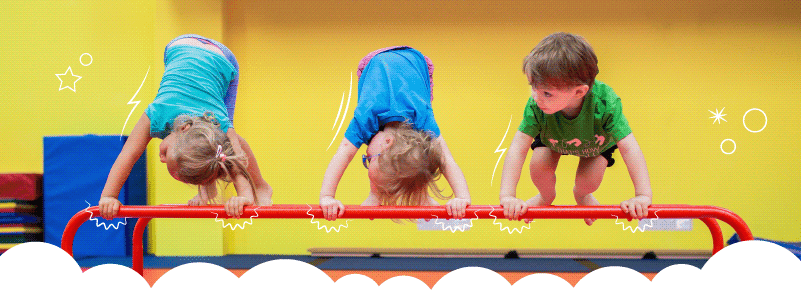
When we think about physical development, we often think about the big moments: a baby’s first steps, a toddler learning to run, a pre-schooler mastering a jump, or a child finally learning to ride a bike.
But physical development is happening long before—and far beyond—those memorable milestones.
A newborn stretching towards a familiar voice. A baby rolling across the floor to reach a favourite toy. A toddler climbing the same step for the tenth time. A pre-schooler balancing on one foot and shouting, “Watch me!”
These moments may seem ordinary, but they are anything but.
Every reach, roll, climb, jump, wobble and tumble is helping a child develop their body, their brain and their growing sense of confidence.
Physical development is about much more than what children can do with their bodies. It helps shape how they learn, explore, communicate, solve problems and experience the world around them.
What is physical development?
Physical development is the gradual process through which children develop the strength, coordination, balance, control and confidence they need to move their bodies effectively in everyday life. It begins from birth and continues throughout childhood.
As children grow, their brains, muscles, bones and nervous systems are constantly developing and working together. New movement skills don’t simply appear because a child reaches a particular birthday. They emerge through a combination of growth, experience, exploration, practice and opportunities to move.
Developmental research, including the work of Esther Thelen, highlights the importance of children’s interaction with their environment. Children develop movement skills by exploring, adapting to challenges and practising through everyday experiences—not simply by reaching a particular age.
This is why opportunities to crawl, climb, balance, throw, dance, run, jump and play are so important.
Gross Motor Skills and Fine Motor Skills
Physical development is often divided into two areas:gross motor skillsandfine motor skills.
Gross motor skills
Gross motor skills involve the larger muscles of the body and allow children to:
- Sit and stand
- Crawl and walk
- Run and jump
- Climb and balance
- Throw and catch
- Kick and pedal
- Coordinate their whole body during movement
These skills help children explore their surroundings and become increasingly independent.
Fine motor skills
Fine motor skills involve the smaller muscles of the hands and fingers.
They allow children to:
- Pick up and manipulate objects
- Feed themselves
- Turn pages in a book
- Build with blocks
- Draw and colour
- Use scissors
- Fasten buttons and zips
- Eventually write with increasing control
Although running and drawing may seem like completely different activities, they share important foundations. Both depend on the brain and body working together to control movement, coordinate actions and respond to the environment.
Strong physical foundations support independence in everyday life.
What is happening behind every movement?
Children don’t simply move because their muscles are getting stronger. Every movement involves a remarkable conversation between the brain, nervous system, muscles and sensory systems.
Balance
Balance helps children keep their bodies stable as they sit, stand, walk, run, climb and change position.
Coordination
Coordination allows different parts of the body to work together smoothly.
Think about a child learning to catch a ball. They need to watch the ball, judge where it is going, move their hands into position and adjust their body—all within moments.
Core strength
The muscles around the trunk provide stability for almost every movement. A strong and stable centre helps children maintain posture and control as they move.
Proprioception
Proprioception is sometimes described as our body’s internal sense of position. It helps children understand where their arms, legs and body are in space without needing to look. When a child climbs, pushes, pulls, carries, jumps or crawls, they are receiving information about how their body is moving and where it is in relation to the world around them.
The vestibular system
Located in the inner ear, the vestibular system helps the brain understand movement, balance and changes in position. Every time a child swings, spins, rolls, jumps, climbs or changes direction, they are giving their brain information about movement and balance. These systems work together constantly. And parents see the results every day. A baby reaching for a toy is developing coordination. A toddler climbing onto the sofa is developing balance and body awareness. A pre-schooler navigating an obstacle course is learning to plan and control their movements. A school-aged child learning to skip is combining balance, rhythm, timing and coordination.
Movement is a full-body learning experience.
Movement helps children learn
One of the most fascinating things about physical development is that movement doesn’t only develop the body. It also supports the developing brain. Research into early childhood development shows that children’s physical experiences are closely connected to cognitive development. As children move, explore and interact with their environment, they are constantly processing information, making decisions and adapting their actions. Movement can support the development ofexecutive functions—the mental skills that help us pay attention, remember information, solve problems, plan, control impulses and manage our behaviour.
For a child, something as simple as navigating an obstacle course might involve:
Where should I go?
Can I get over that?
What happens if I try it this way?
I fell. Should I try again?
How can I get around the obstacle?
That is physical development and problem-solving happening at the same time. This is one reason why active, playful experiences are so valuable during childhood. Children aren’t just exercising.
They’re thinking with their bodies.
Movement builds confidence
Childhood is full of first attempts. The first time a baby rolls over. The first time a toddler climbs a step. The first time a pre-schooler hops on one foot. The first time a child attempts a cartwheel. And many of those first attempts don’t go perfectly. They wobble. They fall. They miss. They try again. This process is incredibly important.
Psychologist Albert Bandura describedself-efficacy as our belief in our ability to achieve something through our own efforts. For children, successfully overcoming a physical challenge can provide a powerful experience:
“I couldn’t do it before. I practised. Now I can.”
That feeling can be incredibly motivating. The confidence gained from mastering a physical challenge doesn’t necessarily stay on the gym floor or playground. It can influence how children approach other challenges too. They begin to learn an important lesson:
Difficulty doesn’t necessarily mean I can’t do it. It might mean I haven’t learned it yet.
Why repetition matters so much
If you’ve ever wondered why your child wants to jump off the same step, climb the same structure or practise the same skill over and over again, this is one reason why.
They’re learning.
Children learn through repetition. Each attempt gives them new information about their bodies and their environment.
They discover:
- How much force they need
- How far they can jump
- How to adjust their balance
- What happens when they move faster or slower
- How to recover when something goes wrong
- What they need to change to try again
To an adult, repeating the same movement for the twentieth time might look unnecessary. To a child, it can be fascinating.
Every repetition is another opportunity to learn.
Physical development supports independence
As children’s physical abilities develop, so does their ability to do things for themselves. A baby reaching for a toy begins to explore independently. A toddler who can climb safely onto a chair becomes less dependent on an adult. A pre-schooler who can use scissors, draw, put on their shoes or climb playground equipment gains another little piece of independence. A school-aged child who can cycle, swim, participate in sports or manage their own equipment develops greater confidence in everyday life. Physical development and independence are therefore closely connected. The more capable children feel in their bodies, the more willing they often become to explore their environment and attempt new things.
Physical development and school readiness
When we talk about school readiness, we often focus on letters, numbers, language and early academic skills. But children also need their bodies to be ready for school.
They need to be able to:
- Sit comfortably and maintain posture
- Carry a backpack
- Hold a pencil
- Use scissors
- Manage buttons, zips and shoes
- Navigate the playground
- Participate in PE and games
- Move safely around the classroom
- Develop the stamina needed for a busy school day
Physical development therefore forms part of the wider foundations for learning and wellbeing. A child who has opportunities to develop strength, coordination, balance and fine motor control is building skills that support many everyday classroom experiences.
Strong bodies help create confident learners.
Physical development also helps children connect
Movement is not always an individual experience. As children grow, physical play becomes increasingly social.
They learn to:
- Take turns
- Follow rules
- Cooperate
- Communicate
- Encourage others
- Solve disagreements
- Manage frustration
- Celebrate success
- Work towards a shared goal
Think about children building an obstacle course together, playing a game of tag, practising a dance routine or working as a team. They aren’t simply moving. They’re learning how to be part of a group. Physical activity can therefore create opportunities for social and emotional development alongside physical development.
Every child develops differently
Perhaps the most important message for parents is this:
Physical development is not a race.
Children don’t all develop their skills at exactly the same time. One baby may walk before their first birthday, while another may spend longer crawling. One toddler may be a fearless climber, while another prefers to watch before joining in. One pre-schooler may love jumping and balancing, while another takes longer to develop confidence with physical challenges. One child may thrive in team sports, while another prefers swimming, gymnastics, dance, cycling, climbing or simply exploring outdoors. These differences are part of what makes every child’s developmental journey unique. Developmental milestones are useful guides, but they should not become a source of pressure or comparison.
Instead of asking:
“Is my child doing this yet?”
it can be more helpful to ask:
“What is my child learning to do now, and how can I give them opportunities to practise?”
So what can parents do?
The good news is that supporting physical development doesn’t require complicated equipment or structured training.
Children need opportunities tomove, play, explore and practise.
Try:
Get outside
Parks, playgrounds, gardens and walks provide endless opportunities to run, climb, balance, jump and explore different surfaces.
Let them climb
Safe climbing experiences help children develop strength, coordination, balance and body awareness.
Create simple challenges
A few cushions, a line of masking tape, a tunnel or some household objects can become an obstacle course.
Encourage independence
Let your child carry something, climb safely, put on their shoes, tidy toys, pour water or help with everyday tasks.
Follow their interests
If your child loves dancing, dance. If they love climbing, climb. If they want to practise the same jump fifty times, let them practise. Enjoyment is a powerful motivator.
Celebrate effort
Instead of only saying:
“You’re so good at that!”
try:
“You kept trying.”
“You worked that out.”
“You didn’t give up.”
“Look how much you’ve improved.”
These messages help children understand that progress comes from exploration and practice.
The Little Gym Parent Reminder
The next time your child asks you to“Watch me!”for the tenth time, remember that you’re watching more than a physical skill develop.
You’re watching confidence grow. You’re watching problem-solving in action. You’re watching coordination become more refined. You’re watching a child discover what their body can do. And you’re giving them something incredibly valuable: the confidence to try again.
Sometimes the most powerful thing a parent can do is simply watch, smile and say:
“You did it!”
At The Little Gym, We See the Whole Child
At The Little Gym, we believe movement is about much more than learning physical skills.
Our approach is designed to support thewhole child—helping children develop stronger bodies, curious minds and confident attitudes through purposeful, playful movement.
Whether your child is taking their first steps, learning to balance, mastering a forward roll or challenging themselves with a new skill, we don’t believe childhood should be about rushing towards the next milestone.
It’s about giving children the opportunity to explore.
To experiment. To try. To wobble. To laugh. To try again.
And ultimately, to discover:
“I can do this.”
Because every jump, every climb, every tumble and every triumph is part of a much bigger journey.
A journey towards becoming a confident, capable and resilient child.
What’s Next?
Physical development looks different at every stage of childhood.
In the next article inThe Little Gym Parent’s Guide to Physical Development, we’ll take a closer look at the very beginning of that journey:
Birth–12 Months: How Babies Discover the World Through Movement
We’ll explore tummy time, reaching, rolling, sitting, crawling, pulling to stand and those exciting first steps—and why every one of these early movements matters.
Sources & Further Reading
- Adolph, K.E. & Hoch, J.E. (2019).Motor Development: Embodied, Embedded, Enculturated, and Enabling. Annual Review of Psychology, 70, pp. 141–164.
- Bandura, A. (1997).Self-Efficacy: The Exercise of Control. New York: W.H. Freeman.
- Center on the Developing Child at Harvard University. (2023).InBrief: The Science of Early Childhood Development.
- Department for Education. (2023).Development Matters. London: Department for Education.
- Diamond, A. (2013). ‘Executive Functions’,Annual Review of Psychology, 64, pp. 135–168.
- Education Endowment Foundation. (2024).Physical Development.
- NHS. (2025).Best Start in Life: Early Learning and Development.
- Piaget, J. (1952).The Origins of Intelligence in Children. New York: International Universities Press.
- Thelen, E. & Smith, L.B. (1994).A Dynamic Systems Approach to the Development of Cognition and Action. Cambridge, MA: MIT Press.
- World Health Organization. (2019).Guidelines on Physical Activity, Sedentary Behaviour and Sleep for Children Under 5 Years of Age. Geneva: WHO.