<Back to news
7 Oct 2026
The Little Gym Parent’s Guide to Physical Development
9–12 Years: Growing Bodies, Growing Independence
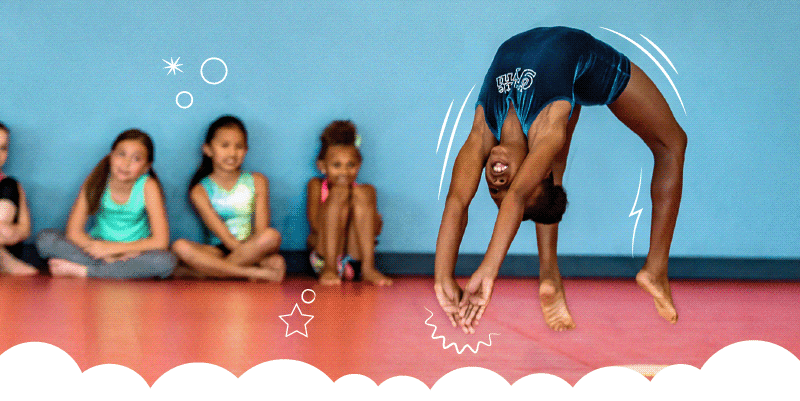
“Look what I can do!” is slowly becoming “I know what I can do.”
Between the ages of nine and twelve, children enter a fascinating stage of development.
They are still very much children, but adolescence is beginning to appear on the horizon.
Their bodies are changing. Their movements are becoming more refined. Their friendships become increasingly important. They start making more independent choices about what they enjoy, what they are good at and where they want to challenge themselves. For some children, this stage may also bring the first signs of puberty and significant growth. And while all of this can feel like a big transition, there is something important to remember:
There is no single timetable for growing up.
Some children experience growth spurts early. Others change much later. Some suddenly shoot upwards and temporarily seem a little awkward in their new bodies. Others develop more gradually. All of these experiences can be completely normal. The goal isn’t to compare.
It is to help children feel strong, capable and comfortable in their changing bodies.
From Childhood Skills to Greater Control
By nine, many children have developed a wide range of basic movement skills.
Now they begin refining them. Running becomes faster and more controlled. Jumping becomes more powerful. Balance becomes more precise. Throwing and catching become more accurate. Complex movement sequences can be performed with much less conscious thought. Whether your child enjoys gymnastics, swimming, football, dance, cycling, climbing or simply playing outdoors, they are increasingly able to combine strength, coordination, balance, timing and body awareness. This growing efficiency means they can focus less on how to move and more on what they want to achieve.
A child learning a gymnastics routine, for example, can begin thinking about the sequence and performance rather than concentrating on every individual movement.
What You May Notice Between 9 and 12
During these years, children often develop:
- Greater strength
- Increased stamina
- Improved balance and agility
- Faster reactions
- More precise coordination
- Greater control of complex movement patterns
- Improved sport-specific skills
- Increased independence in physical activities
- More refined fine motor control
They may also become much more aware of their own abilities.
Some children begin to identify themselves as:
“a footballer” “a gymnast” “a dancer” “a swimmer” “a cyclist”
or simply:
“Someone who loves being outdoors.”
Finding activities they genuinely enjoy can help movement become a positive part of their identity.
Growth Spurts Can Change Everything
One of the biggest differences during this stage is that children’s bodies can begin changing at very different rates. A child may suddenly grow several centimetres in a relatively short period. Their arms and legs may seem unusually long. Their balance may temporarily feel different. Movements that previously felt easy might suddenly require more concentration. This can happen because children don’t always grow evenly. Their bodies are constantly adapting. And sometimes that means a child who was previously incredibly coordinated may suddenly appear a little awkward.
That’s okay.
It doesn’t mean they have lost their ability. Their brain and body are simply adjusting to a changing physical framework. With time and practice, coordination usually catches up.
Puberty: Everyone Has Their Own Timeline
For some children, the first signs of puberty may begin during these years.
The timing varies considerably. Some children begin experiencing changes earlier, while others won’t notice significant changes until their teenage years. Physical changes may include changes in height, body shape, strength, flexibility and coordination. These changes can sometimes feel confusing or uncomfortable. Children may also become increasingly conscious of how their bodies compare with their friends. This is why the messages children receive from adults during this stage are so important. Rather than focusing on:
How their body looks
or
How they compare with others
focus on:
What their body can do.
Celebrate What Bodies Can Do
As children become more aware of their appearance, conversations about movement can easily become focused on performance, weight or looks.
Instead, try to shift the conversation towards capability.
Talk about:
Strength
Endurance
Coordination
Concentration
Confidence
Progress
Teamwork
Personal goals
Instead of:
“You’ve got so strong!”
you might say:
“You’ve worked really hard to build that strength.”
Instead of:
“You’re so slim and athletic.”
try:
“Your body is doing an amazing job helping you climb, run and move.”
This helps children develop a healthier relationship with their bodies. Their bodies aren’t there to look a certain way.
Their bodies are there to help them experience life.
Movement Becomes More Independent
One of the biggest developmental changes during late childhood is growing independence.
Children increasingly begin to decide:
What do I enjoy?
What do I want to get better at?
Who do I want to do it with?
How much challenge do I want?
Parents can support this by providing opportunities rather than directing every decision. Your child might decide they no longer enjoy one activity and become passionate about another.
That’s okay. The goal isn’t necessarily to find the activity they will do forever. It is to help them discover that movement can be enjoyable, meaningful and part of everyday life.
Finding Their Own Motivation
When children are younger, parents often provide the motivation.
“Let’s go to gymnastics.”
“Time for swimming.”
“Come outside and play.”
As children approach adolescence, motivation increasingly needs to come from within. This is an important transition. Instead of constantly telling your child what activity they should do, try asking:
“What would you like to try?”
“What would you like to improve?”
“What makes you feel good?”
“What do you enjoy doing with your friends?”
Helping children identify their own reasons for being active can create habits that are much more likely to continue into adolescence and adulthood.
Movement and Emotional Wellbeing
Physical activity during these years supports more than physical health.
Regular movement can contribute to:
- Emotional wellbeing
- Concentration
- Sleep
- Physical fitness
- Strong bones and muscles
- Confidence
- Social connection
For children navigating increasing academic expectations, changing friendships and the transition towards secondary school, movement can also provide an important opportunity to switch off, have fun and experience a sense of achievement.
Sometimes children don’t need another conversation about their day.
They need to go outside and kick a ball.
Or ride their bike.
Or climb.
Or dance.
Or simply run around with their friends.
Movement can create space for children to reset.
Friendship and Belonging
As children get older, friendships become increasingly influential.
Movement can provide an important sense of belonging.
Whether children are:
- Playing football
- Practising gymnastics
- Learning dance
- Riding bikes
- Swimming
- Exploring outdoors
- Playing games in the park
they are also learning how to interact with other people.
They negotiate. They communicate. They encourage. They compete. They cooperate. They disagree. They make up. They celebrate each other.
These shared experiences can strengthen friendships and help children develop a sense of belonging.
The Importance of Resilience
Children between nine and twelve are also becoming increasingly aware of success and failure.
They may compare their performance with their friends. They may become frustrated when something doesn’t come easily. They may decide they’re “not good at” something after one unsuccessful attempt. This is where the lessons from earlier childhood become incredibly important.
Skills can be learned.
Progress takes practice.
Mistakes are part of learning.
Encourage your child to focus on their own journey.
Instead of asking:
“Did you win?”
try:
“How did you feel about it?”
“What did you learn?”
“What would you like to work on next?”
These questions help children develop a healthier relationship with challenge.
Don’t Let Performance Take Over
As children become more skilled, it can be tempting for adults to focus heavily on performance.
Faster. Higher. Stronger. More goals. Better scores.
But children still need opportunities to move simply because it’s fun. Not every activity needs to have a measurable outcome. Not every game needs a winner. Not every physical experience needs to improve a skill. Sometimes children simply need to play.
The enjoyment of movement is one of the strongest foundations for maintaining an active lifestyle.
Fine Motor Skills Continue to Develop
Although gross motor development often gets the most attention, fine motor skills continue to mature throughout late childhood.
Children may become increasingly skilled at:
- Handwriting
- Drawing
- Crafting
- Playing musical instruments
- Cooking
- Sewing
- Building models
- Using tools
- Typing and other digital tasks
These activities require increasing precision, hand strength and coordination.
As with gross motor skills, practice and meaningful opportunities help children refine their abilities.
Try This at Home
Support their interests
If your child loves cycling, find opportunities for bike rides. If they love dance, encourage them to dance. If they love football, kick a ball together. If they love climbing, explore safe climbing opportunities.
Follow their interests.
Make movement part of family life
Go for walks. Explore somewhere new. Cycle together. Take a weekend hike. Play games outside. Movement doesn’t always need to be a scheduled activity.
Encourage personal goals
Ask your child what they would like to improve.
Then help them work towards it.
Focus on capability
Talk about strength, coordination, confidence, effort and wellbeing rather than appearance.
Keep movement social
Encourage activities with friends where possible.
For many children, being active becomes much more enjoyable when it is connected to friendship.
Give them downtime too
Being active doesn’t mean being busy every minute. Children also need rest, sleep and time to simply be children.
Every Child Develops Differently
Late childhood can be one of the most visibly varied stages of development. Two children who are the same age may look completely different. One may be experiencing a growth spurt.
Another may not have changed much physically. One may be developing significant strength. Another may still be waiting for those changes. One may be confident and coordinated. Another may suddenly seem awkward because their body is changing.
All of these experiences can fall within the wide range of normal development.
Try not to make comparisons the focus.
Instead, help your child understand that their body has its own timeline.
Quick Milestone Guide: 9–12 Years
| Age | What you may notice |
|---|---|
| 9–10 years | Greater strength and endurance, refined sport-specific skills, improved balance and agility, and increasingly precise handwriting and fine motor control. |
| 11–12 years | Some children experience early growth spurts or signs of puberty, while others do not. Children may perform increasingly complex movement patterns, develop greater speed and stamina, and become more independent in physical activities and everyday tasks. |
Remember: these are broad developmental patterns, not deadlines. The timing of growth and puberty varies widely between children.
 The Little Gym Parent Reminder
Your child’s body is going to change.
And sometimes those changes may feel strange to them.
They may suddenly become taller.
Their coordination might temporarily feel different.
They may become more conscious of how they look.
They may compare themselves with friends.
This is where your voice can make a real difference.
Remind them:
Your body doesn’t have to look like anyone else’s.
You don’t have to be the best.
You don’t have to develop at the same time as your friends.
Your body is yours and it is capable of amazing things.
Celebrate what they can do, rather than how they look.
Celebrate progress rather than comparison.
And remind them that growing up isn’t a race.
Movement for Life
The habits children develop during late childhood can help shape their relationship with physical activity for years to come.
When movement is associated with:
Fun.
Friendship.
Confidence.
Achievement.
Freedom.
Belonging.
children are more likely to see being active as something they want to do rather than something they have to do.
That is a powerful difference.
The goal isn’t to create children who are obsessed with performance.
It is to help them become young people who understand:
“My body is capable. I know how to look after it. And I enjoy moving.”
Strong Bodies. Curious Minds. Confident Kids.
From those first wobbly steps to the increasingly confident movements of late childhood, physical development is a journey.
And by the age of twelve, something remarkable has happened.
Your child has gone from discovering:
“What can my body do?”
to beginning to understand:
“Who am I, and what do I want my body to help me do?”
That is an important transition.
At The Little Gym, we believe children should have opportunities to explore movement without unnecessary pressure.
To try.
To challenge themselves.
To make mistakes.
To build confidence.
To discover what they enjoy.
And ultimately, to develop a positive relationship with movement that can stay with them long after childhood.
Because the greatest achievement isn’t a perfect cartwheel, the fastest sprint or the highest jump.
It’s helping a child grow into someone who feels:
Strong. Capable. Confident. Resilient.
And ready for whatever comes next.
The Bigger Picture
Across every stage of childhood, the message remains the same:
Movement matters.
From tummy time to the playground.
From those first steps to the first bike ride.
From learning to jump to learning a complex gymnastics skill.
Movement helps children explore, learn, connect and grow.
Physical development isn’t simply one part of childhood.
It is woven through the whole journey.
And sometimes, the most powerful thing we can give children is not another instruction or another achievement to chase.
It is simply the opportunity to move, explore and discover: