<Back to news
31 Aug 2026
The Little Gym Parent’s Guide to Physical Development
Why Movement Matters:
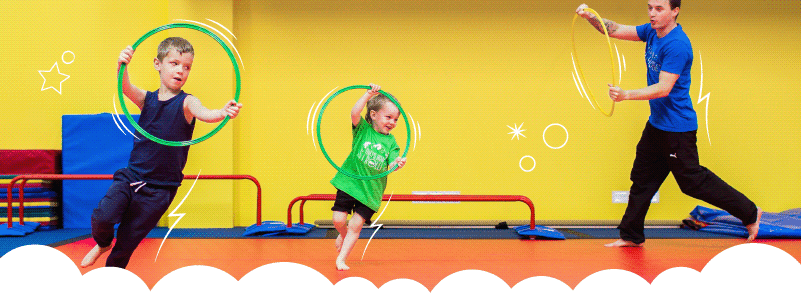
Helping Children Grow Strong, Confident & Capable
Before children can tell us about the world, they explore it with their bodies.
A tiny baby reaches for your face. A toddler climbs the same step for the tenth time. A pre-schooler proudly shouts, “Watch me!” A six-year-old keeps trying to master a new skill.
And an older child begins discovering the activities, challenges and friendships that make them feel capable and confident. These moments may look like simple play.
But they are anything but simple.
Every wobble, climb, jump, balance, tumble and triumph is helping children grow.
Physical development gives children much more than stronger muscles and better coordination. Through movement, children develop confidence, independence, resilience, problem-solving skills, emotional regulation, social skills and a growing belief in what they can achieve.
And this is exactly whythe environment we create around children matters.
Children Need More Than Space to Move
Children are naturally curious movers. But having space to run around isn’t always enough.
They need opportunities to:
- Explore.
- Experiment.
- Take safe risks.
- Try something difficult.
- Make mistakes.
- Try again.
- Celebrate progress.
And they need adults who know when to encourage, when to challenge, when to support and when to simply step back and let a child discover something for themselves. This is where purposeful physical play can make such a difference.
And this is at the heart of The Little Gym.
The Little Gym: Where Movement Becomes Learning
At The Little Gym, we don’t see gymnastics simply as learning how to do a forward roll, handstand or cartwheel. We see every physical skill as anopportunity for development.
A balance activity isn’t just about staying upright. It develops concentration, body awareness, coordination and confidence. Climbing isn’t just about getting from A to B. It involves planning, problem-solving, strength, spatial awareness and perseverance. Learning a new gymnastics skill isn’t just about mastering the movement.
It teaches children:
“I can do difficult things.”
That is a lesson that can travel far beyond the gym.
Three-Dimensional Learning
Our approach is designed around the idea that children are developing in multiple ways at the same time.
GET MOVING — Physical
Children develop strength, balance, flexibility, coordination, body awareness and physical confidence.
BRAIN BOOST — Cognitive
Children learn to listen, remember, plan, problem-solve, make decisions and adapt their movements.
CITIZEN KID — Social & Emotional
Children practise taking turns, communicating, cooperating, managing emotions, persevering through challenges and celebrating one another.
So while a child might think they’re simply having fun climbing through an obstacle course… we know they’re doing so much more.
A Place Where Children Can Safely Challenge Themselves
Children need challenges. But they need theright kind of challenge. Too easy, and they don’t experience the satisfaction of mastering something new. Too difficult, and they can quickly become frustrated or lose confidence. At The Little Gym, instructors are trained to create age-appropriate challenges that encourage children to stretch themselves while feeling supported.
A child might be encouraged to:
- Reach a little further.
- Balance for a little longer.
- Try the movement one more time.
- Find a different way to approach the challenge.
And when they succeed, the celebration isn’t simply: “You did the skill!”
It’s also: “Look what YOU were able to achieve.”
That distinction matters.
Because we aren’t just building skills.
We’re building self-belief.
From “Watch Me!” to “I Can Do It Myself.”
Think about the journey a child takes through childhood.
At first, they need us to help them. Then they want us to watch them. And eventually, they want to do it themselves. That growing independence is one of the most beautiful parts of childhood.
The Little Gym creates opportunities for children to experience that progression. A baby discovers movement with their parent nearby. A toddler begins exploring their environment with increasing independence. A preschooler starts taking on physical challenges for themselves. A school-aged child learns to work towards increasingly complex skills. And as they grow, they begin to understand:
“I know how to challenge myself.”
That is physical development becomingindependence.
It’s Okay to Wobble
One of the most important things children learn through physical activity is thatgetting something wrong isn’t the end of the story.
They wobble. They fall. They miss. They struggle. They get frustrated. And then… they try again.
At The Little Gym, we don’t expect children to get everything right the first time. In fact, some of the most valuable moments happen when they don’t.
Because that’s when we can help children discover:
- Mistakes are okay.
- Trying again is okay.
- Asking for help is okay.
- Progress takes practice.
And eventually: “I DID IT!”
That feeling of achievement is incredibly powerful.
Building Curious Minds Through Movement
Throughout this series, we’ll explore how closely movement is connected to cognitive development.
Children aren’t simply using their muscles when they move.
They’re constantly processing information.
- Where is my body?
- How far do I need to jump?
- What happens if I move this way?
- What comes next?
- How can I get over that?
- Can I try it differently?
At The Little Gym, activities are deliberately structured to give children opportunities to think while they move.
They listen. They remember. They plan. They adapt. They problem-solve. They make decisions.
Their bodies are learning and their brains are learning with them.
Learning to Be Part of a Community
Movement also creates opportunities for children to connect with others.
At The Little Gym, children don’t develop in isolation. They learn alongside other children. They practise waiting for their turn. They learn to share space. They encourage one another. They celebrate each other’s achievements. They experience moments when something doesn’t go their way. They learn how to try again. They discover that everyone has different strengths. And they begin to understand something incredibly important: “I am part of a group.”
For many children, these experiences help develop confidence that extends well beyond the gym.
Every Stage Needs Something Different
One of the reasons The Little Gym works across such a wide age range is that children’s developmental needs change dramatically as they grow.
Babies:
Need safe opportunities to explore movement, develop body awareness and build the foundations for future physical skills.
Toddlers:
Need freedom to explore while developing coordination, balance, independence and confidence.
Pre-schoolers:
Need opportunities to combine skills, solve physical challenges and build confidence through repetition and imaginative play.
6–8 Year Olds:
Need appropriate challenges that teach perseverance, resilience and the satisfaction of mastering something difficult.
9–12 Year Olds:
Need increasing independence, opportunities to refine skills, discover their interests and develop a positive relationship with their changing bodies.
The environment needs to evolve with the child. And so do we.
Strong Bodies
Physical development matters. Children need opportunities to build:
- Strength
- Balance
- Coordination
- Flexibility
- Agility
- Body awareness
- Spatial awareness
- Motor control
But physical capability is only one piece of the puzzle. Because a strong body without confidence doesn’t necessarily create a confident child. That’s why our approach goes further.
Curious Minds
Children need opportunities to think. To experiment. To make decisions. To solve problems. To figure things out. To discover that there isn’t always just one way to approach a challenge. Movement provides a wonderfully natural way to do this. And when children are having fun, they’re often learning without even realising it.
Confident Kids
Perhaps the most important outcome is confidence. Not confidence that comes from always being the best. But confidence that comes from knowing:
- “I can try.”
- “I can make mistakes.”
- “I can ask for help.”
- “I can keep going.”
- “I can learn.”
That is the kind of confidence that can follow a child into the classroom, the playground, friendships and eventually adulthood.
The Role of the Instructor
A big part of what makes the environment at The Little Gym special isn’t the equipment.
It’s thepeople.
Our instructors aren’t simply there to demonstrate skills.
They observe. They encourage. They adapt. They challenge. They celebrate. They help children find the next achievable step. And they understand that the child who needs a little more encouragement today may be the child confidently attempting something new tomorrow.
The goal isn’t to make every child move in exactly the same way. It is to help each child discoverwhat they are capable of.
And Parents Are Part of the Journey
For parents, watching your child develop can be both exciting and emotional.
You remember their first roll. Their first steps. Their first independent climb. Their first successful jump. Their first time saying: “I can do it myself.”
At The Little Gym, parents aren’t simply watching a class. They are seeing pieces of their child’s development unfold. And hopefully, they leave with ideas they can take into everyday life:
- Give them time.
- Let them try.
- Celebrate effort.
- Don’t rush the process.
- Let them experience safe challenges.
- Focus on what their bodies can do.
And sometimes… Just watch and say, “Wow. Look at you.”
The Seven-Part Journey
Over the next seven blogs, we’ll explore what physical development looks like frombirth through to 12 yearsand why each stage matters.
1. What Is Physical Development?
Understanding the foundations behind movement and why physical development is about much more than milestones.
2. Birth–12 Months
How babies discover the world through reaching, rolling, crawling, sitting and those first steps.
3. 1–3 Years
How toddlers build independence through running, climbing, balancing, pushing, pulling and exploring.
4. 3–5 Years
How preschoolers develop coordination, confidence and increasingly complex movement through play.
5. 6–8 Years
Why challenge, repetition and perseverance are so important for developing resilience and self-belief.
6. 9–12 Years
How growing bodies, changing coordination and increasing independence shape late childhood.
7. Why Movement Matters
Bringing it all together and exploring how movement supports healthy bodies, curious minds, confidence, resilience and lifelong wellbeing.
More Than a Gymnastics Class
Perhaps the easiest way to explain what we do at The Little Gym is this:
We use movement as the vehicle for helping children grow. Yes, they learn physical skills.
But along the way, they also learn to:
- Try.
- Think.
- Persist.
- Communicate.
- Connect.
- Problem-solve.
- Believe.
And that’s why a child might come into The Little Gym simply wanting to learn a cartwheel…
…and leave having learned something much bigger: “I can do hard things.”
The Journey Starts With One Small Movement
The journey of physical development begins long before a child walks through the doors of The Little Gym.
It begins with that first tiny reach. That first roll. That first attempt to crawl. And it continues through every jump, climb, balance, tumble and challenge that follows. Our role isn’t to rush that journey. It’s to create an environment where children feelsafe enough to explore, supported enough to try and confident enough to keep going. Because when children are given the right environment, something wonderful happens. They don’t just become better movers.
They become more confident learners, problem-solvers, friends and independent little people.
And that is why, at The Little Gym, we believe in nurturing:
