<Back to news
11 May 2026
Part 5 of School Readiness Series: Sensory Development Creates Calm, Focused Learners
Written By Heidi Lopez-Gamez
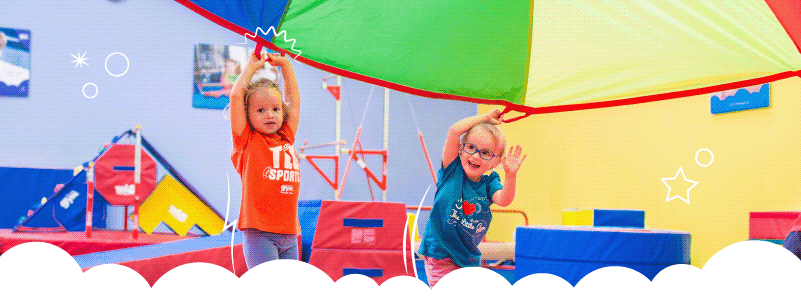
How strengthening the senses brings every part of school readiness together
As a Little Gym teacher, I’ve learned that every behaviour tells us something. A child who can’t sit still, who melts down during transitions, or who seems overwhelmed by noise isn’t “acting out.” They’re communicating through their body what feels exciting, comforting, or simply too much.
And something many parents may not realise:
Children don’t rely on just five senses. They rely on ten sensory systems, including those that help them balance, sense where their body is in space, and stay calm and organised.
When these systems are strong, children feel grounded.
When they’re overwhelmed, everything — listening, learning, focusing — becomes more difficult.
That’s why sensory development is such an important part of school readiness. It’s also the piece that ties together everything we’ve explored in this series so far: strong bodies, purposeful play, growing confidence, and blossoming curiosity. All of these skills rely on a sensory system that feels steady and in control.
At The Little Gym, our purposeful, playful curriculum strengthens these systems from the inside out, helping children feel calmer, more focused, and more confident.
Strong bodies and ready minds create children who are prepared not just for school, but for life.
Why sensory development matters for learning
The American Academy of Paediatrics highlights that movement-rich play supports the sensory systems responsible for attention, emotional regulation, and behaviour (AAP, 2018). When these systems are well-developed, children can:
- Sit upright without tiring
- Focus for longer
- Transition more smoothly
- Stay calmer in busy environments
- Engage confidently in learning
When sensory systems are still developing, children can appear distracted or overwhelmed. When I see a child who’s fidgety or struggling to focus, it’s usually a sign that their sensory systems are still finding their balance. Their bodies are working hard to get organised enough to learn comfortably.
Movement is the key to strengthening these systems.
Balance: strengthening the vestibular system
Swinging, spinning, rolling, and balancing aren’t just fun; they stimulate the vestibular system, which helps children understand movement and balance.
In class, I see how vestibular activities help children:
- Improve balance
- Develop postural control
- Feel more stable and grounded
- Maintain attention for longer
The NHS notes that vestibular development plays a crucial role in attention and self-regulation (NHS, Early Years Development). When children feel steady in their bodies, they feel steadier in their minds.
Body awareness: building proprioception
Climbing, pushing, pulling, hanging, and weight-bearing activities strengthen the proprioceptive system — the sense that tells children where their body is in space.
This system helps children:
- Judge force
- Coordinate movements
- Feel calm and organised
- Manage big emotions
Proprioceptive input is naturally regulating. That’s why children instinctively climb, jump, squeeze, or push when they’re dysregulated; their bodies are seeking sensory input to feel balanced again.
At The Little Gym, we build this into every class through:
- Climbing challenges
- Resistance activities
- Weight-bearing skills
- Obstacle courses
These experiences help children feel more in control of their bodies and their emotions.
Regulation through structure and repetition
One of the most powerful tools we use is predictable structure. Children thrive when they know what’s coming next. Our classes follow a familiar rhythm that helps children practise:
- Transitioning between activities
- Managing excitement
- Calming their bodies
- Preparing for focused moments
Repetition strengthens neural pathways, helping children internalise routines and regulate more independently over time.
And when children feel regulated, everything else becomes easier — listening, learning, joining in, and trying new things.
Across this school readiness series, we’ve explored how children develop the foundations they need for learning:
- Strong bodies that support posture, coordination, and fine motor skills
- Purposeful play that builds listening, turn-taking, and everyday learning behaviours
- Confidence that grows through personal progress
- Curiosity that emerges when children feel capable and safe to explore
- Sensory systems that help children stay calm, focused, and ready to learn
Sensory development is the thread that weaves all of these pieces together.
When children feel organised in their bodies, they can use every skill they’ve built — their strength, their confidence, their curiosity, their social skills — with greater ease.
That’s why our approach is so much more than movement.
The outcome: calm, focused, ready learners
As sensory systems strengthen, children become:
- More focused
- Better regulated
- More confident in busy environments
- More able to follow routines
- Ready to engage in learning
These aren’t just school skills, they’re life skills.
If you’d like to see how sensory-rich movement supports calm, confident learning, we’d love to welcome you into the gym. Watching children climb, swing, and explore with growing ease is one of the clearest reminders of just how capable — and ready — they truly are.
References
American Academy of Paediatrics. (2018). The Importance of Play in Promoting Healthy Child Development and Maintaining Strong Parent-Child Bonds.
NHS. (n.d.). Early Years Development: Sensory Processing & Self-Regulation.
Diamond, A. (2013). Executive Functions. Annual Review of Psychology, 64, 135–168.